
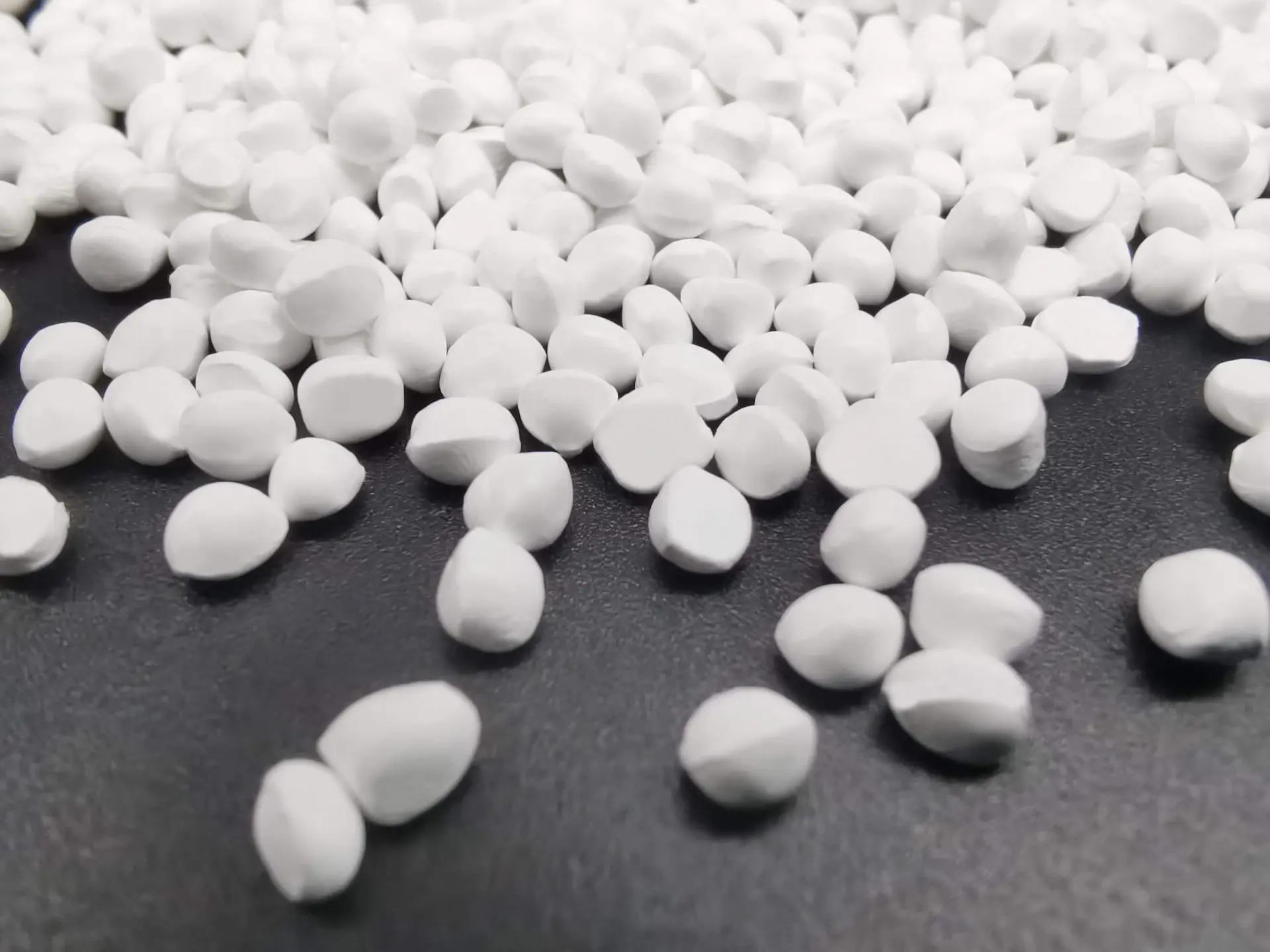
Ask any plant manager: nothing destroys shift profitability faster than an unexpected run of defective film. When black spots, gels (often called “fish eyes”), or color streaks suddenly appear across the extrusion bubble, operators usually panic-adjust temperatures or drop the line speed. That is a mistake. Nine times out of ten, these visual defects aren’t mechanical—they are material. Specifically, they stem from masterbatch dispersion issues. For plants running high-opacity courier bags or thin packaging films, a single 50-micron unmelted pigment agglomerate means a torn bubble, a rejected roll, and lost revenue. This guide cuts through the guesswork, providing a hard-hitting diagnostic roadmap to identify and eliminate extrusion defects right at the hopper.
1. Stop Guessing, Start Testing: The FPV Standard
Before you start pulling the screw or blaming the die head, look at your raw material. A frequent trap in flexible packaging is buying colorants based on price per kilo, entirely ignoring the dispersion rating.
If the pigment isn’t sheared properly during the twin-screw compounding process at the masterbatch factory, it forms hard agglomerates. When these hit your extruder, they don’t melt. They clog your screen packs, spike your melt pressure, and eventually blow through into the film.
The only way to prove dispersion quality is the FPV (Filter Pressure Value) test (EN 13900-5).
The Benchmark (< 2 bar/g): Excellent dispersion. The pigment passes cleanly through a 14-micron mesh. Your screen packs stay clean, backpressure remains stable, and the film is flawless.
The Red Flag (> 5 bar/g): Severe agglomeration. The pigment clusters act like microscopic rocks blocking the mesh. If you load this into the hopper, prepare for endless screen changes, heavy gels, and line shutdowns.
Never accept a batch of high-loading colorant without a verified FPV lab report.
2. Factory-Floor Diagnostic Matrix: Cause & Solution
When a defect hits the winder, your operators need immediate, actionable steps. Use this diagnostic table to match the visual symptom directly to its root cause on the line.
Table 1: Rapid Troubleshooting for Blown Film Defects
| Visual Defect on Film | Material Root Cause | Mechanical Root Cause | Immediate Factory-Floor Solution |
| Gels / Fish Eyes (Clear, unmelted specks) | Carrier resin MFI is too low compared to the base LLDPE/LDPE. The masterbatch resists melting. | Barrel temperature in the compression zone is too low to initiate shear melting. | 1. Bump up temperatures in zones 2 & 3 by 5-10°C. 2. Demand a masterbatch formulated with a matched MFI carrier. |
| Gels (Hard, brownish cross-linked specks) | High moisture content in the resin causing hydrolytic degradation inside the barrel. | Stagnant polymer cooking and degrading on the screw flights. | 1. Verify hopper dryer settings (dry at 80°C if needed). 2. Run a heavy-duty purging compound to strip the screw. |
| Black Spots (Carbonized, brittle flakes) | Rarely a masterbatch issue, unless the carrier resin is heavily degraded. | Polymer is trapped in “dead zones” inside the die adapter, carbonizes, and breaks off. | 1. Drop the die edge temperature by 5°C. 2. Schedule downtime to dismantle, clean, and polish the die lips. |
| Color Streaks / “Comet Tails” | Severe pigment agglomeration. The masterbatch simply isn’t breaking down. | Screw RPM is too high, pushing the melt out before proper shear mixing can occur. | 1. Check FPV data. Reject the batch if > 5 bar/g. 2. Install a finer, multi-layer screen pack (e.g., 80/120/80 mesh) to force backpressure and increase shear mixing. |
3. The Heavyweight Challenge: Courier Bags & Carbon Black
The e-commerce logistics sector demands courier bags with 100% opacity. You cannot afford to let consumers see what is inside the package. To achieve this on a 40-micron film, extruders rely heavily on black masterbatch loaded with up to 50% Carbon Black.
Here is the engineering reality: Carbon black nanoparticles have massive surface energy. They naturally want to fuse together. If your masterbatch supplier cuts corners on their compounding time, you are feeding solid carbon lumps into your film line. In a thin-gauge courier bag, a heavy carbon agglomerate doesn’t just create a dark streak—it physically stretches the polymer melt until it ruptures, causing pinholes or a total bubble collapse.
For high-speed, thin-wall opaque films, high-dispersion carbon black is not a luxury; it is a mechanical necessity.
Market Relevance: Keeping the Middle East Supply Chain Moving
The GCC’s logistics and e-commerce markets are expanding at breakneck speed. Platforms are shipping millions of parcels across Saudi Arabia and the UAE daily. This requires local blown film plants to run 24/7.
However, operating an extrusion line in a Middle Eastern industrial zone during July is brutal. Ambient factory temperatures regularly cross 40°C. Your extruders are already fighting to maintain cooling parameters. If you feed poorly dispersed masterbatch into the line, the excess shear friction caused by pigment agglomerates will push your melt temperatures over the edge. The result? Uncontrollable gauge variations, burnt polymer, and black spots. By sourcing low-FPV, high-dispersion masterbatches, local manufacturers can stabilize their melt pressures and keep their lines running at maximum output, regardless of the ambient heat.
What do you think?
[…] This issue is a frequent bottleneck on packaging lines, similar to the dispersion failures detailed in our Blown Film Troubleshooting Guide for Gels and Black Spots. […]
Comments are closed.