Virgin polymer prices are notoriously volatile. For injection molding facilities running high-volume, low-margin products, a 10% spike in resin costs can wipe out quarterly profits. The immediate reaction on the factory floor is often to aggressively cut raw material costs, usually by dumping cheap additives into the hopper. The inevitable result? Brittle plastic chairs that shatter under weight and disposable lunch boxes that crack during shipping.
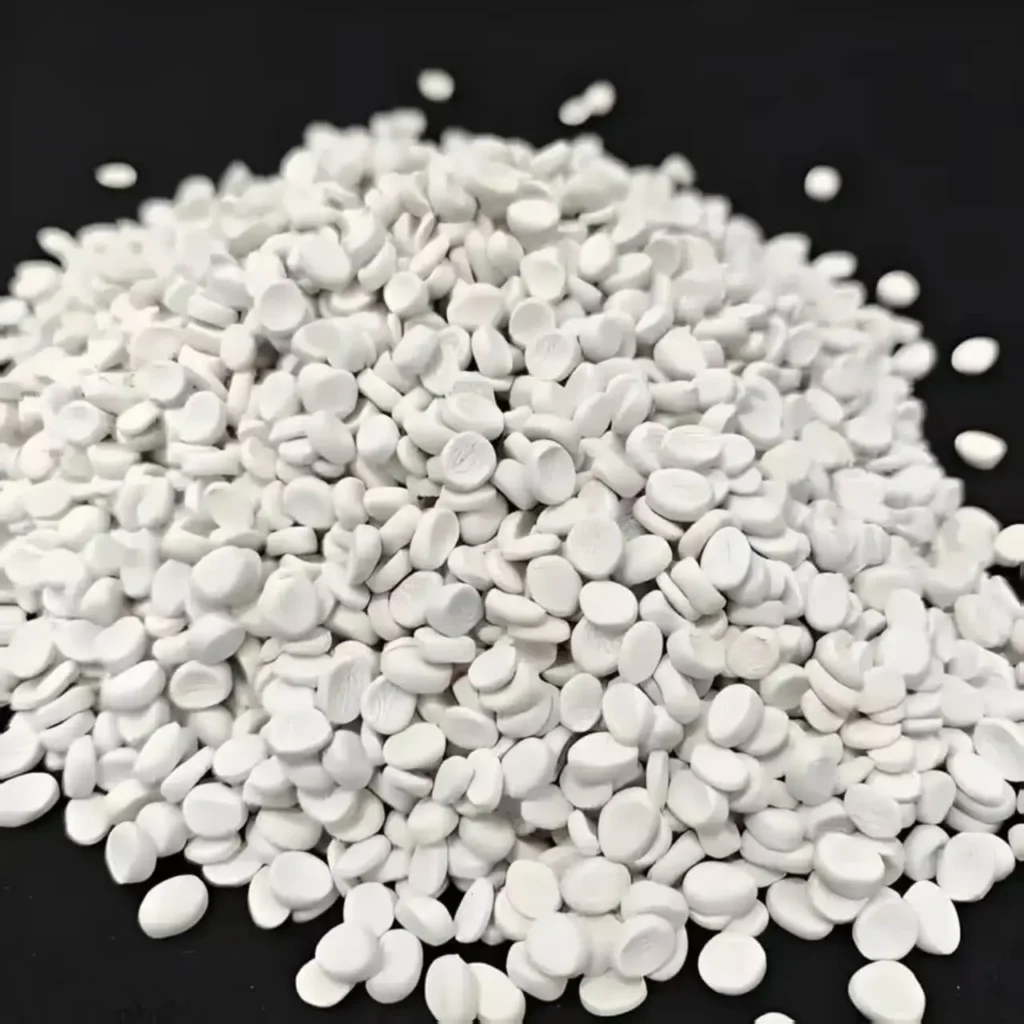
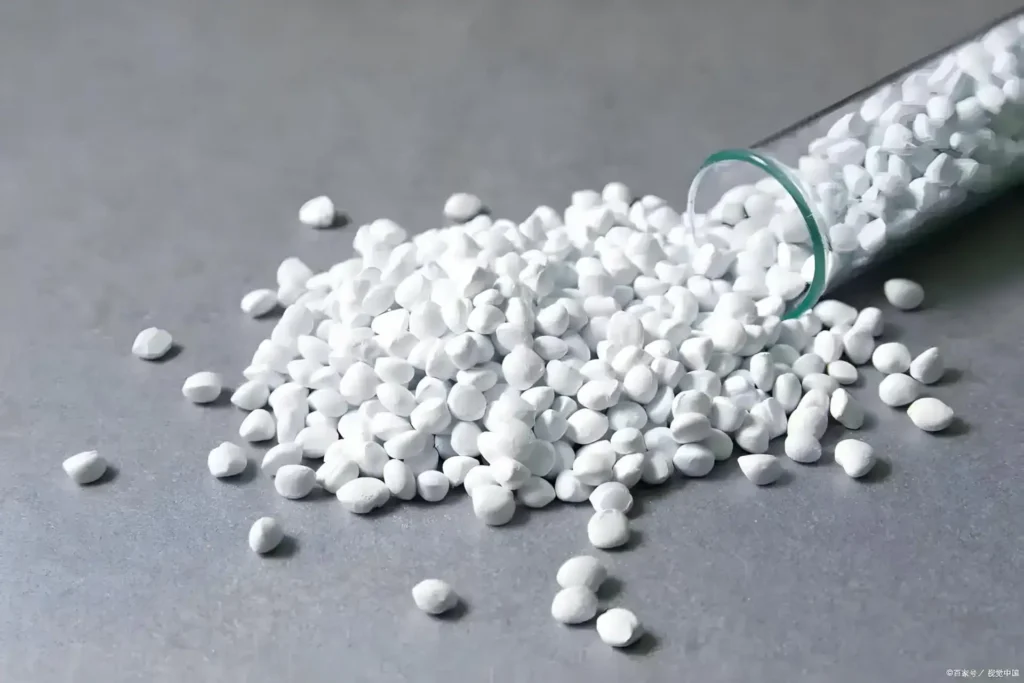
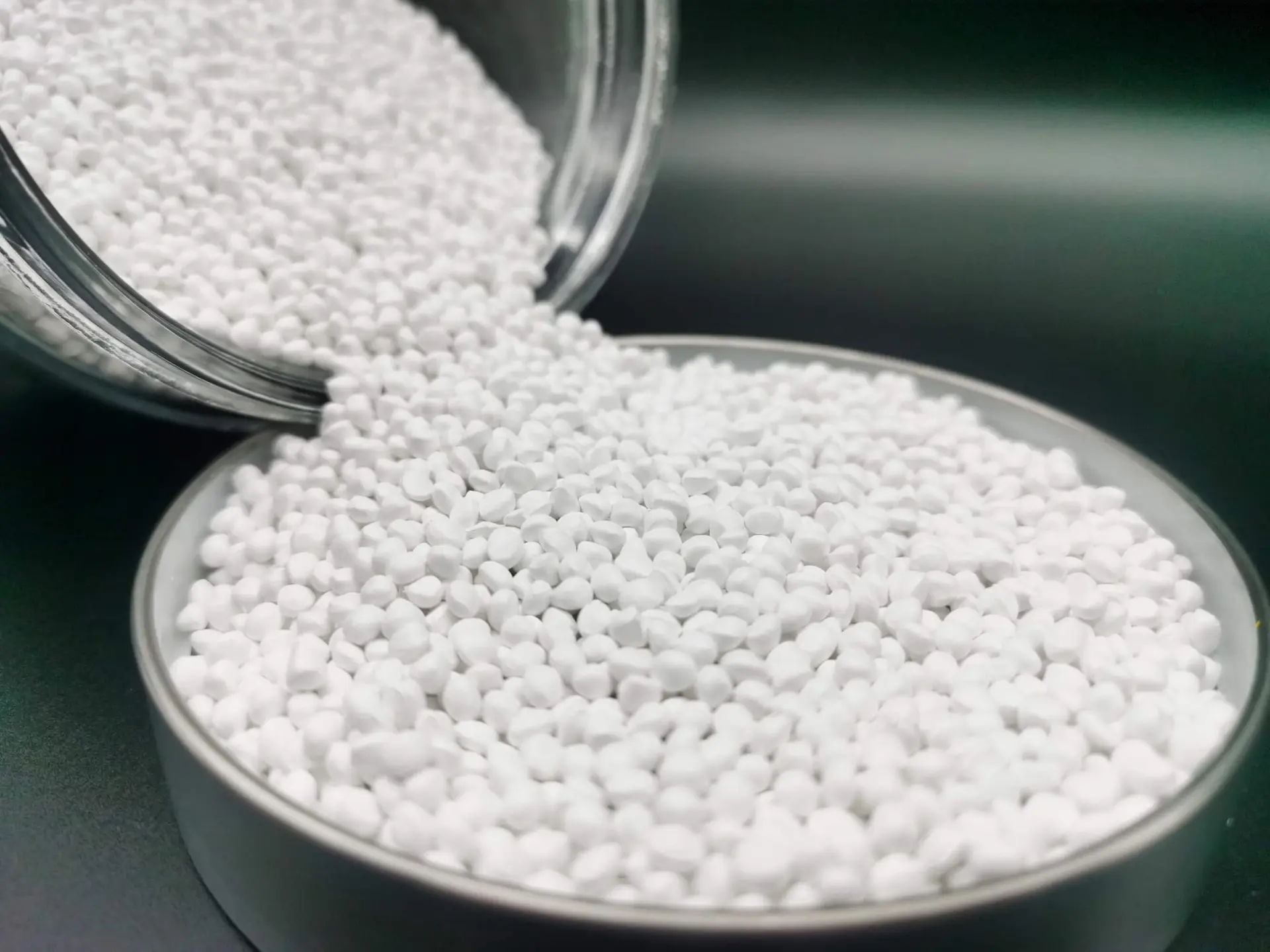
Cost reduction shouldn’t equal quality destruction. By engineering the polymer matrix with highly specified Calcium Carbonate (CaCO3) filler masterbatch, manufacturers can heavily reduce polymer cost while actively improving certain mechanical properties. This guide breaks down the exact correlation between mineral particle size and structural integrity, delivering a blueprint for cost-effective plastic manufacturing.
1. Beyond Cheap Weight: The Mechanics of Injection Molding Optimization
Most buyers view CaCO3 masterbatch simply as a cheap volumetric replacement for expensive PP or PE resin. While replacing 20% of your polymer with a lower-cost mineral absolutely transforms your profit margins, the technical benefits on the production line are equally critical for injection molding optimization:
Accelerated Cycle Times: Calcium carbonate boasts a significantly higher thermal conductivity than standard polyolefins. The plastic melt cools and solidifies faster in the mold, shaving seconds off your cycle time and increasing daily output.
Dimensional Stability: Adding rigid inorganic particles into the polymer matrix restricts the movement of plastic chains as they cool. This drastically reduces post-molding shrinkage and eliminates warpage—a massive advantage when molding large, flat items like tabletops.
Eliminating Sink Marks: The higher density and reduced shrinkage of the filled melt help pack out the mold more effectively, preventing those frustrating sink marks on thick-walled sections.
2. Step-by-Step Guide: How Mesh Size Dictates Mechanical Strength and Surface Finish
The single biggest mistake factory managers make is buying filler masterbatch based solely on price per kilogram, completely ignoring the particle size of the calcium carbonate. If you want to maintain mechanical strength, you must understand “Mesh Size” (the number of holes per linear inch in a grading sieve).
Here is exactly how particle size affects your final product:
Step 1: Understand the Particle Dispersion Geometry A lower mesh number means larger, coarser particles (e.g., 800 mesh ≈ 18 microns). A higher mesh number means ultra-fine powder (e.g., 3000 mesh ≈ 4.5 microns). When you inject plastic into a mold, these mineral particles suspend inside the polymer matrix.
Step 2: The Surface Finish Equation
Coarse Particles (< 1500 mesh): Large particles cannot pack tightly. As the plastic cools and shrinks slightly around them, the large mineral chunks push against the surface, creating micro-roughness. The result is a matte, dull, or even chalky finish.
Fine Particles (> 2500 mesh): Ultra-fine particles integrate seamlessly into the polymer chains. The mold surface dictates the finish, allowing you to maintain a high-gloss, premium appearance even at a 20% dosing rate.
Step 3: Drop Dart Impact Strength Mechanics
This is where cheap fillers destroy products. When mechanical stress (like a falling weight or a sudden impact) hits a plastic part, the energy travels through the polymer chains.
Large, coarse CaCO3 particles act as “stress concentrators.” They interrupt the polymer flow heavily, creating microscopic voids. When impact energy hits these large particles, cracks initiate immediately. The plastic shatters.
Conversely, ultra-fine, surface-treated CaCO3 particles (coated with coupling agents like stearic acid) bond chemically with the resin. They actually act as energy absorbers. A well-dispersed 3000 mesh filler masterbatch will preserve—and sometimes slightly improve—the drop dart impact strength and rigidity of the base resin.
3. Application-Specific Dosage and Specifications
You cannot use the same filler for a heavy garden chair and a 0.5mm thick food container. Here is the operational baseline:
Injection Molded Furniture (Chairs, Tables):
Requirement: High load-bearing capacity, impact resistance against drops.
Specification: 2500 – 3000 mesh CaCO3 masterbatch.
Recommended Dosage: 15% – 25%. Going beyond 25% requires impact modifiers (like POE) to prevent the legs from snapping under heavy dynamic loads.
Thin-Wall Disposable Lunch Boxes:
Requirement: High melt flow index (MFI), FDA compliance, no warpage under hot food.
Specification: Ultra-fine 3000+ mesh, highly transparent filler (talc or specialized CaCO3) to prevent clouding the container.
Recommended Dosage: 10% – 20%. The carrier resin must have a high MFI to ensure rapid mold filling without burning.
Non-Wovens (Spunbond PP):
Requirement: Microscopic precision. The spinnerets that extrude non-woven fibers are incredibly narrow.
Specification: 5000+ mesh (Nano-scale) calcium carbonate.
Recommended Dosage: 5% – 10%. Coarse particles will instantly cause spinneret clogging, leading to massive line shutdowns and broken filaments.
Market Relevance: Aligning with Middle Eastern Manufacturing Shifts
The GCC market is undergoing a massive industrial transformation. Saudi Arabia and the UAE are rapidly localizing FMCG manufacturing, shifting from importing finished plastic goods to importing raw materials and molding them domestically.
However, local manufacturers face fierce price competition from Asian imports. To win bids for supplying disposable food packaging to mega-events, or outdoor furniture to local hospitality sectors, GCC factories must ruthlessly optimize their material costs. But there is a catch: the Middle Eastern logistics network is brutal. A plastic pallet or chair that becomes brittle due to cheap, coarse fillers will shatter during transport in a 50°C summer environment.
By upgrading to premium, ultra-fine CaCO3 filler masterbatches, local injection molders can drop their resin costs by up to 15% while guaranteeing the structural integrity required to survive the region’s harsh physical demands.