
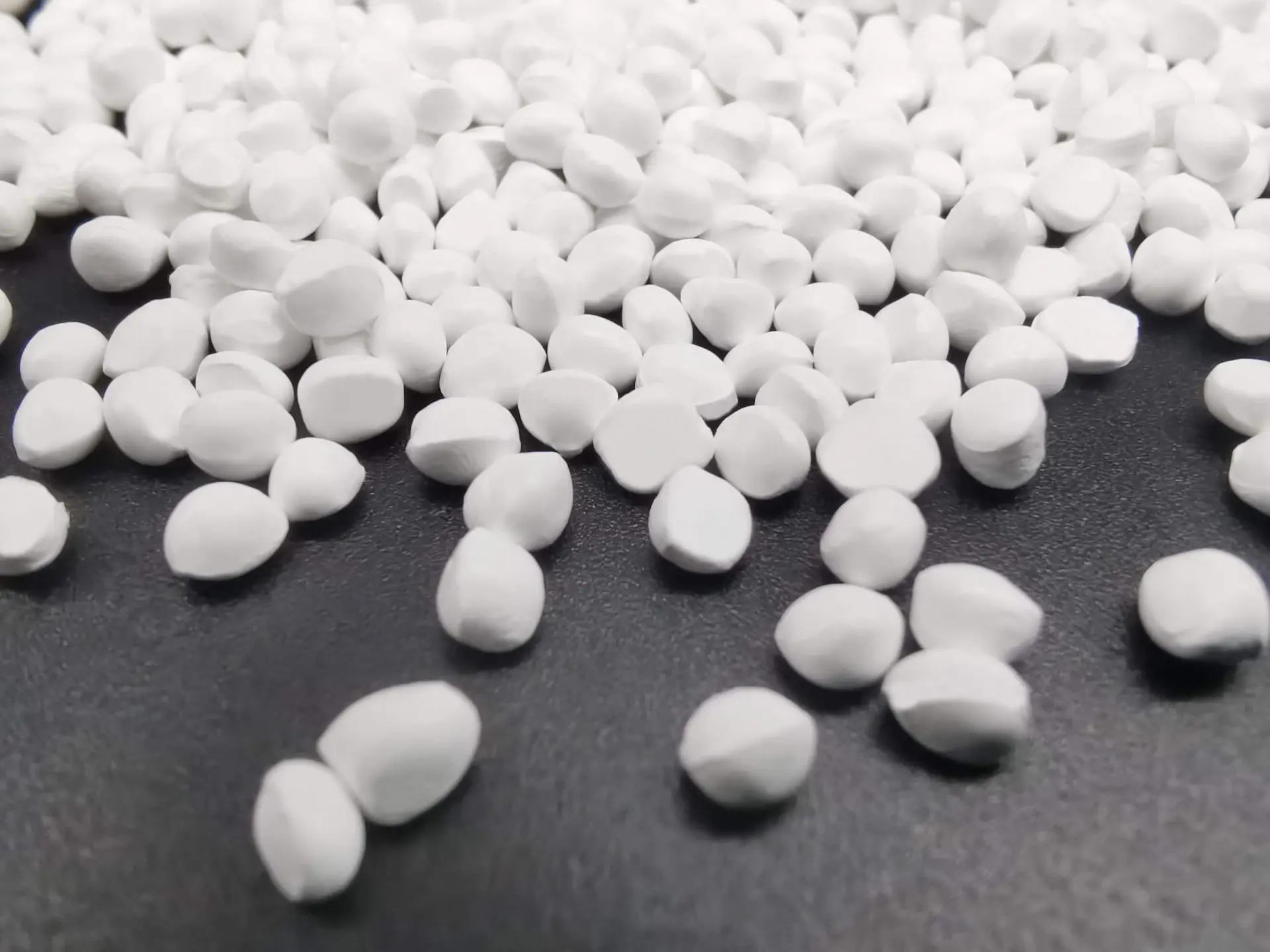
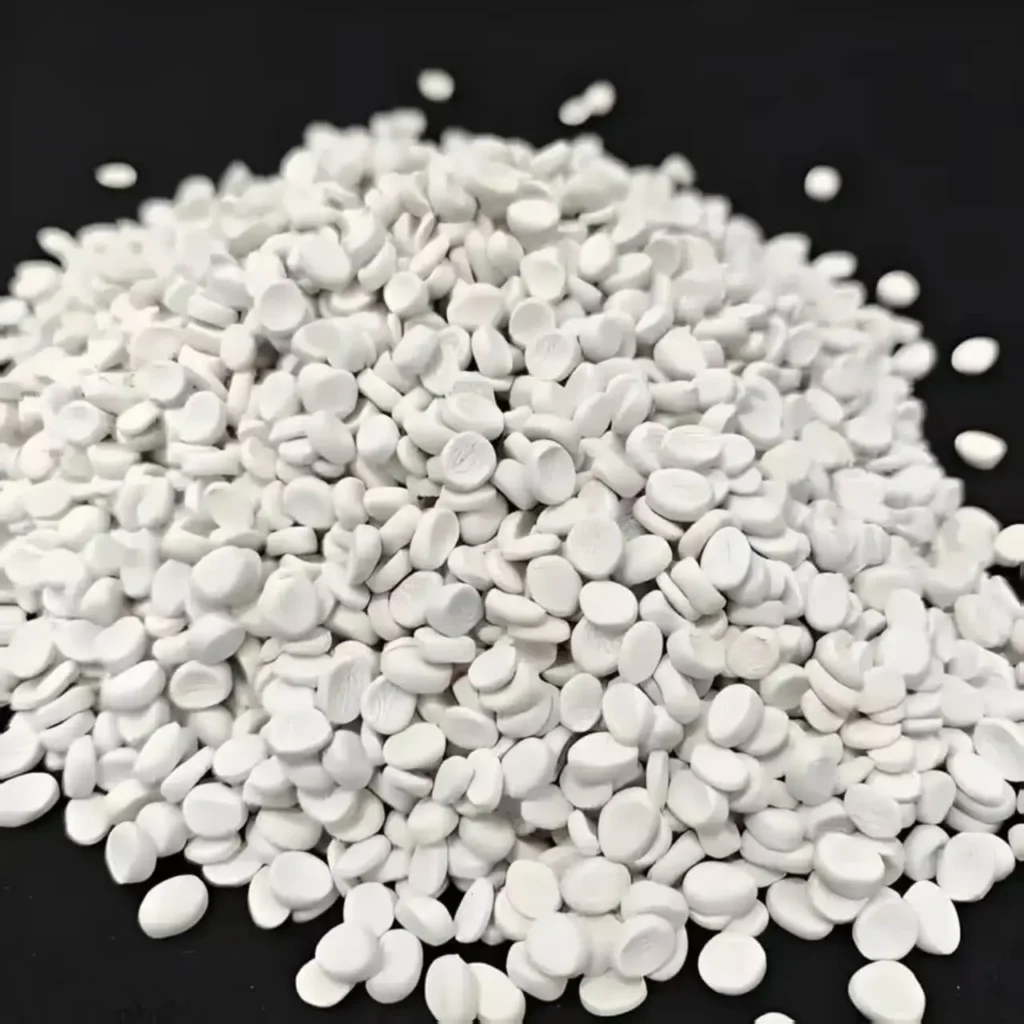
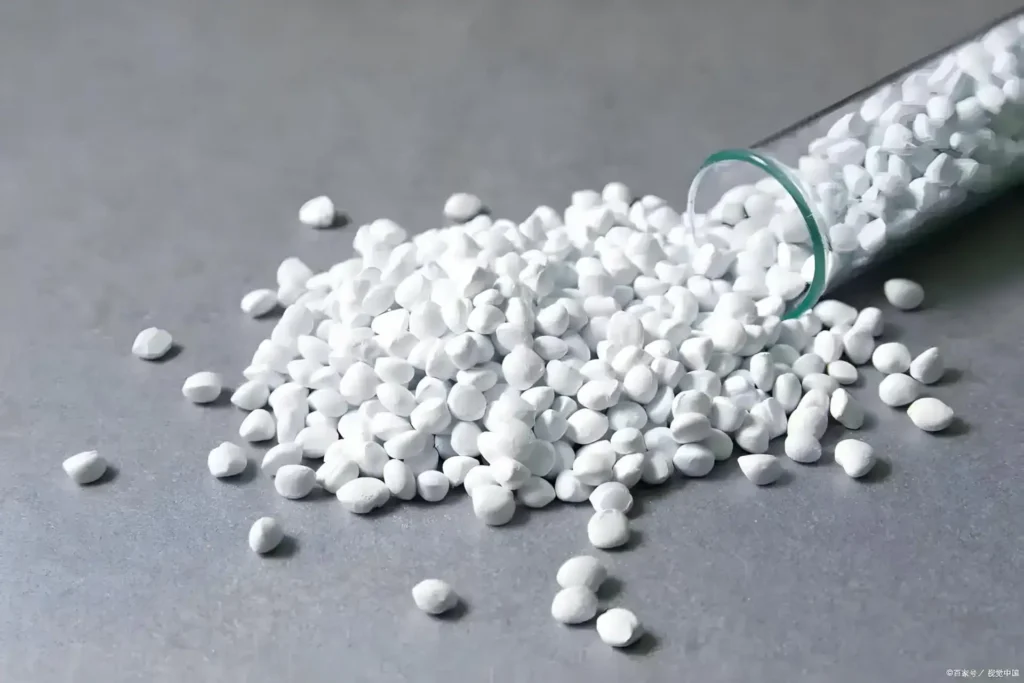
The fundamental difference between Anatase and Rutile Titanium Dioxide (TiO2) in plastic coloration lies in their crystalline structure and refractive index. Rutile TiO2 possesses a denser, more compact tetragonal unit cell, yielding a refractive index of 2.73, whereas Anatase TiO2 has a less dense structure with a refractive index of 2.52. This variation directly dictates the pigment’s light-scattering efficiency, chemical stability, and photo-reactivity within a polymer matrix. High-performance Rutile White Masterbatch provides maximum opacity at lower dosing levels and actively blocks ultraviolet-induced polymer degradation.
In high-volume rigid packaging and thin-film extrusion, white is never just white. Plant managers regularly face two critical failures: thin-walled containers that leak light under retail displays, and outdoor plastic components that turn a brittle, pale yellow within months of deployment. When these issues occur, buyers often assume the masterbatch dosage was too low.
The real culprit is almost always hidden in the chemistry of the inorganic pigment. Buying a white masterbatch based solely on its “total ash content” or “pigment loading percentage” without verifying the titanium dioxide polymorph is a fast track to product rejection. This technical brief exposes the structural physics of TiO2 for plastics and outlines how selecting the correct crystal form protects your brand from catastrophic aesthetic and mechanical failures.
1. The Physics of Opacity: Why Refractive Index Matters
The primary function of a white masterbatch is to provide opacity—physically masking the underlying polymer melt or the packaged contents. Opacity is not achieved by blocking light, but by bending and scattering it.
According to the laws of optical physics, the scattering power of a pigment particle depends directly on the difference between its refractive index and that of the surrounding polymer matrix (standard Polyethylene or Polypropylene has a refractive index of roughly 1.50).
The Anatase Performance Deficit: With a refractive index of only 2.52, Anatase TiO2 has limited scattering capability. To achieve total opacity in a 50-micron film using Anatase, you must overload the compound, which increases the compound density and destroys the tensile properties of the film.
The Rutile Superiority: Rutile’s refractive index of 2.73 creates a massive optical delta against the polymer matrix. This higher index maximizes the scattering coefficient. Utilizing a high opacity white colorant formulated with Rutile TiO2 allows packaging converters to reduce wall thickness (light-weighting) while maintaining complete opacity, directly slashing raw material consumption per part.
2. Eradicating the Yellowing Vector: The Photocatalytic Trap
The most severe consequence of cheap white masterbatch selection is solar-induced yellowing. This failure is driven by an irreversible photochemical reaction.
Titanium dioxide is naturally a semiconductor. When hit by UV light wavelengths shorter than 400nm, the electrons within the TiO2 crystal are excited, moving from the valence band to the conduction band. This movement leaves behind highly reactive “electron holes.”
Anatase as a Destructive Catalyst: The crystal lattice of Anatase is open and unstable under UV exposure. These electron holes instantly react with moisture and oxygen at the polymer interface, generating highly destructive Hydroxyl Radicals (·OH). These radicals act like microscopic buzzsaws, aggressively cleaving the carbon-carbon bonds of the surrounding PP or PE matrix. As the polymer degrades, chromophores form, causing the plastic to yellow, chalk, and lose impact strength.
The Rutile Defense Mechanism: Rutile’s tetragonal lattice is inherently far more stable, exhibiting significantly lower photochemical activity. Premium masterbatch formulators go a step further: they specify Rutile grades that have undergone an inorganic surface treatment. The TiO2 crystals are encapsulated in a dense layer of Silica (SiO2) and Alumina (Al2O3). This inorganic shell acts as an absolute physical barrier, trapping excited electrons and preventing them from reaching the polymer chains.
3. Processing Characteristics: Dispersion and Screen Pack Life
Beyond the final product aesthetics, pigment selection directly impacts the mechanical performance of your twin-screw compounding and extrusion machinery.
Abrasiveness: Anatase is physically softer (Mohs hardness of 5.5 to 6.0) than Rutile (Mohs hardness of 6.0 to 6.5). While some manufacturers falsely claim Anatase reduces screw wear, the reality is that the poor dispersion profile of untreated Anatase requires higher head pressures, causing worse mechanical friction overall.
Agglomeration: Uncoated TiO2 grades are highly hydrophilic, meaning they absorb atmospheric moisture during transport and storage. This moisture causes the fine particles to clump into hard agglomerates inside the extruder hopper. In thin-film blown lines, these agglomerates clog screen packs rapidly, spiking head pressures and causing cosmetic “comet tails” on the film web. High-grade Rutile masterbatches utilize organic surface treatments (such as silanes or polyols) to ensure excellent hydrophobic compatibility with polyolefin carrier resins.
Market Relevance: Surviving the High-Lux Demands of the GCC
For plastic converters operating within the GCC, pigment stability is the ultimate differentiator. The region’s environmental exposure combines extreme ambient heat with a high ultraviolet index.
Furthermore, the Middle East is a dominant hub for high-end dairy, juice, and bottled water packaging. A white milk bottle or juice container sitting in a retail distribution center or an open-air logistics lot in Riyadh or Dubai is subjected to intense high-lux environments. If the packaging manufacturer uses an Anatase-based white masterbatch to save on upfront material costs, the container will yellow rapidly, signaling a false perception of food spoilage to consumers. By standardizing on premium, densely-coated Rutile White Masterbatches, regional packaging manufacturers ensure that their products maintain a pristine, clinical white finish throughout the entire supply chain shelf-life.
What do you think?
[…] Locking the Supply Chain: A reliable Custom Color Masterbatch Matching Service locks in the exact CAS numbers and chemical manufacturers for every pigment in your formula. For example, if a specific shade relies on a premium Rutile TiO2 for its base opacity, substituting it with a cheaper alternative will immediately destroy the masking power, a failure mechanism detailed in our Anatase vs. Rutile TiO2 Analysis. […]
[…] Rutile Selection: Achieving deep, consistent masking power requires high-concentration, surface-treated Rutile $TiO_2$. Anatase grades must be strictly avoided, not only for their poor refractive index but for their catalytic reactivity, as fully detailed in our technical brief on Titanium Dioxide Selection. […]
Comments are closed.