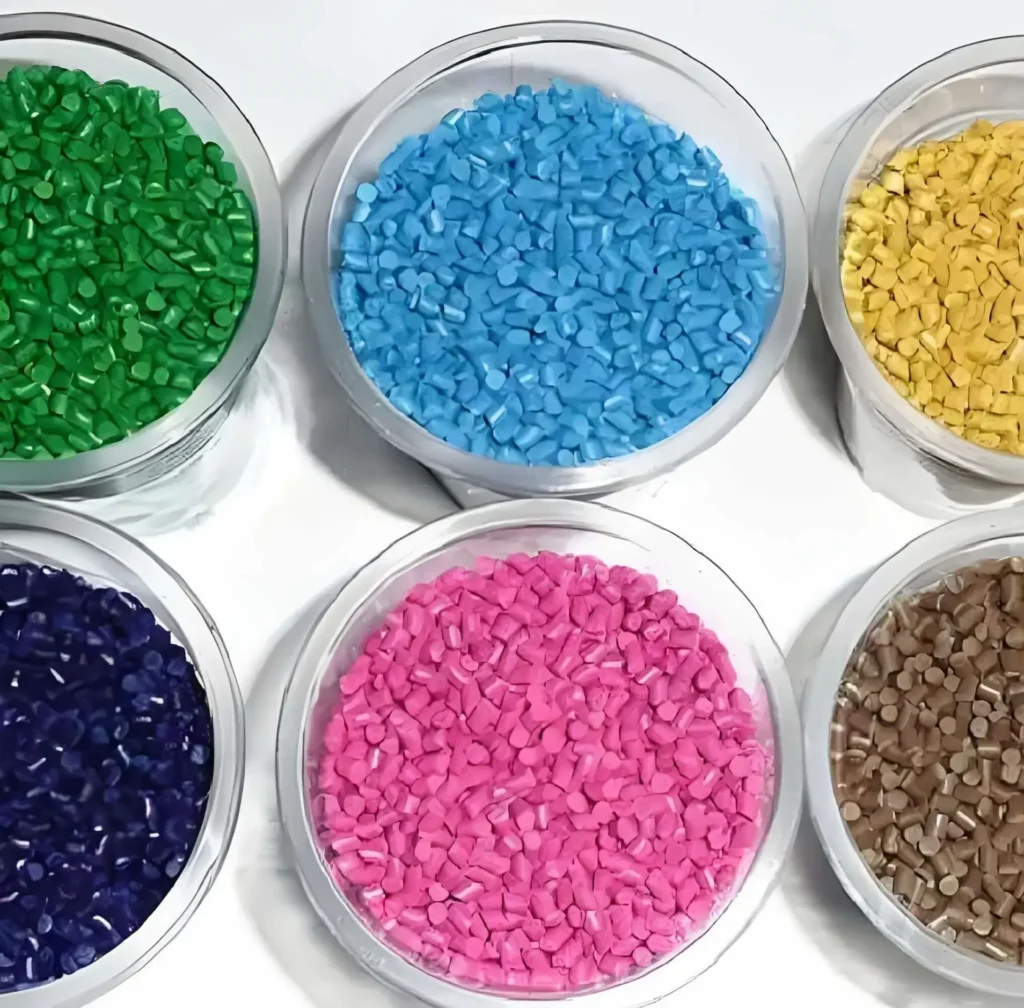
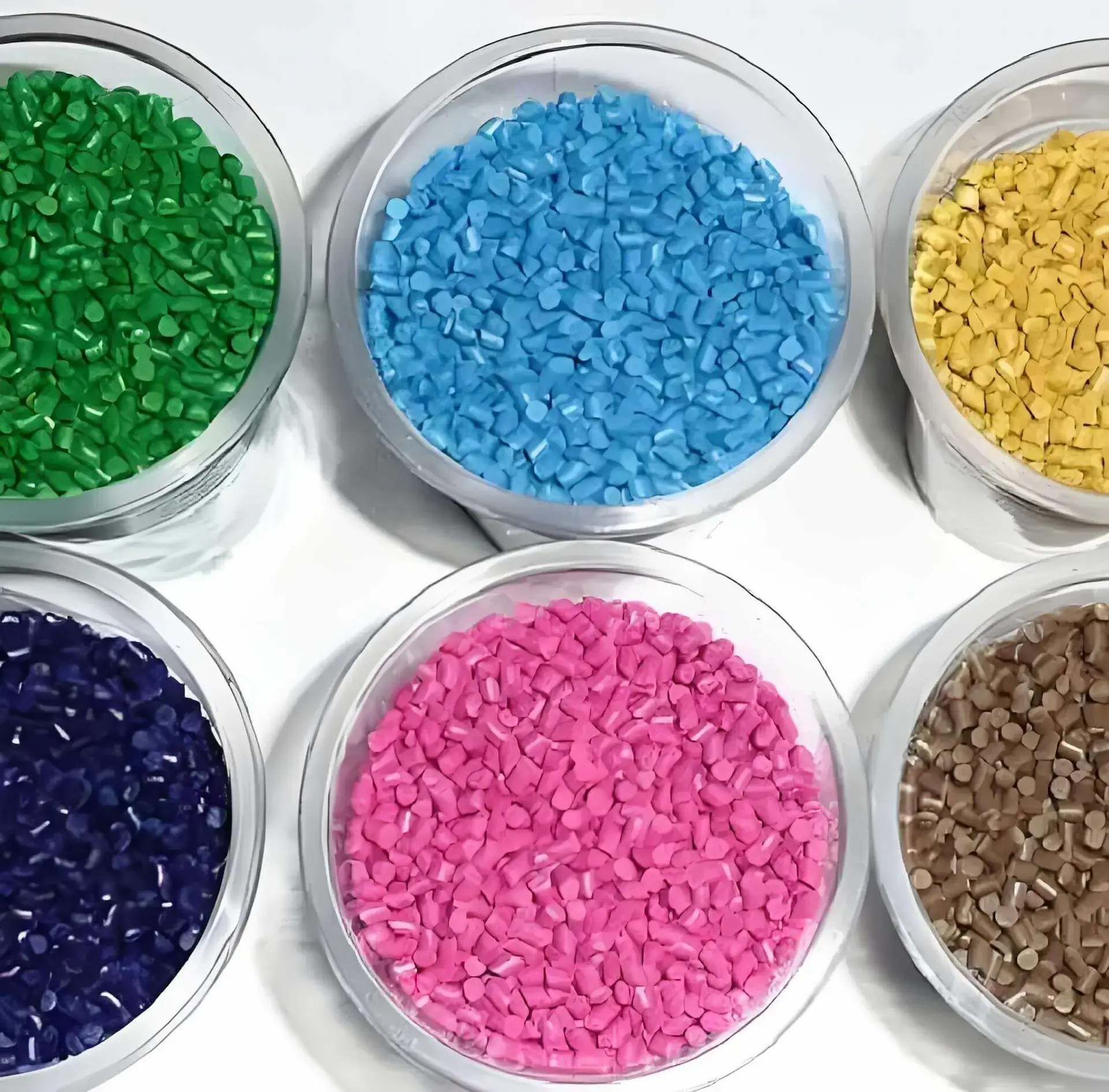
In high-volume polymer processing, masterbatch lot consistency refers to the exact replication of a target color’s spectral reflectance curve across multiple, chronologically separated production runs. When evaluating a custom plastic colorant supplier for global brand packaging, visual inspection is insufficient. Compliance relies on the CIELAB color space, where true Pantone color matching in plastics is verified using a spectrophotometer to ensure the total color difference (Delta E, or $\Delta E$) remains strictly below 0.8. Exceeding this optical tolerance indicates raw material substitution, poor dispersion, or carrier resin mismatch, leading to immediate rejection of the molded parts by downstream brand owners.
Winning a contract to produce packaging for a global FMCG brand (Fast-Moving Consumer Goods) is a major milestone for any plastic converter. However, the true test is not passing the initial sample approval; it is maintaining that exact Pantone shade over two years and 500 metric tons of production.
When bottles from “Batch 1” are placed next to bottles from “Batch 14” on a retail shelf, any color drift is instantly perceived by the consumer as a sign of expired or counterfeit product. Retailers will issue massive chargebacks for color inconsistency. This technical procurement guide outlines the mathematical and chemical protocols required to audit a masterbatch supplier, ensuring they possess the infrastructure to deliver absolute zero lot-to-lot variance.
1. The Mathematics of Color: Moving Beyond the Human Eye
If your masterbatch supplier relies on a technician holding a color chip up to a window to approve a batch, you are already at risk. Human eyes are subjective, easily fatigued, and incapable of quantifying color drift.
The CIELAB Standard: Professional color matching operates entirely within the 3D CIELAB color space ($L^*$ for lightness, $a^*$ for red/green, $b^*$ for yellow/blue).
Enforcing Delta E ($\Delta E$): The total color difference between the approved master sample and the current production batch is calculated as $\Delta E$. For standard industrial parts, a $\Delta E \le 1.5$ might be acceptable. However, for premium cosmetics or automotive interiors, the masterbatch formulation must be engineered to hold a $\Delta E \le 0.8$. Your supplier must provide a digital spectrophotometer readout (TDS/COA) with every single shipment to prove mathematical compliance.
2. Raw Material Traceability: The Root of Color Drift
Why does a custom color shift six months into a production contract? The root cause is almost always supply chain substitution at the masterbatch factory.
Spot Market Dangers: Low-tier colorant suppliers buy base pigments on the open spot market to save costs. A blue pigment sourced from Factory A in January will have a slightly different chemical impurity profile than a blue pigment sourced from Factory B in June.
Locking the Supply Chain: A reliable Custom Color Masterbatch Matching Service locks in the exact CAS numbers and chemical manufacturers for every pigment in your formula. For example, if a specific shade relies on a premium Rutile TiO2 for its base opacity, substituting it with a cheaper alternative will immediately destroy the masking power, a failure mechanism detailed in our Anatase vs. Rutile TiO2 Analysis.
3. The Metamerism Trap: Standardizing the Illuminant
A molded plastic cap looks perfectly matched to the Pantone standard under the fluorescent lights of the factory floor, but looks entirely different (perhaps too red or too dull) under the LED lighting of a retail store. This optical illusion is called metamerism.
The Cause: Metamerism occurs when two colors appear to match under one light source but have different spectral reflectance curves, causing them to mismatch under a different light source. This happens when the masterbatch supplier uses a different combination of pigments to achieve the color than what is in the original Pantone ink standard.
The Protocol: During the initial matching phase, you must inform your masterbatch supplier of the final retail environment. The lab must formulate the color to match under specific standard illuminants (e.g., D65 for daylight, TL84 for European retail lighting) and verify the match in a standardized light booth to ensure the color remains stable across all viewing environments.
4. Extrusion Dynamics: Carrier Resin and Shear Stability
The physical production of the masterbatch itself must be as tightly controlled as the chemistry.
Gravimetric Dosing: Volumetric feeding in twin-screw extruders is prone to bulk-density errors. Auditing a supplier means ensuring they use loss-in-weight gravimetric feeders, which dose pigments by exact mass, removing human error and machine vibration from the equation.
Thermal and Rheological Consistency: As explored in our technical brief on Coloring Engineering Plastics and Thermal Degradation, if the masterbatch supplier alters the Melt Flow Index (MFI) of the carrier resin, it changes how the pigment disperses in your injection molding machine. Poor dispersion reduces the “tinting strength” of the masterbatch, causing the final part to look lighter or streaky, even if the chemical formula is correct.
Market Relevance: Protecting Global Brand Equity
Global brands are aggressively auditing their Tier 2 and Tier 3 supply chains. Whether you are producing rigid PET containers for a multinational beverage company in the GCC or supplying injection-molded chassis components for consumer electronics, you cannot hide color variance. Brand owners now arm their QA inspectors with handheld spectrophotometers.
Partnering with a sophisticated Colored Masterbatch manufacturer acts as a vital firewall. By utilizing suppliers that operate under strict ISO-certified quality management systems, maintain extensive pigment libraries, and rely on digitized color formulation software, plastic converters can guarantee global brand owners that the one-millionth product will look exactly like the first-article sample.