
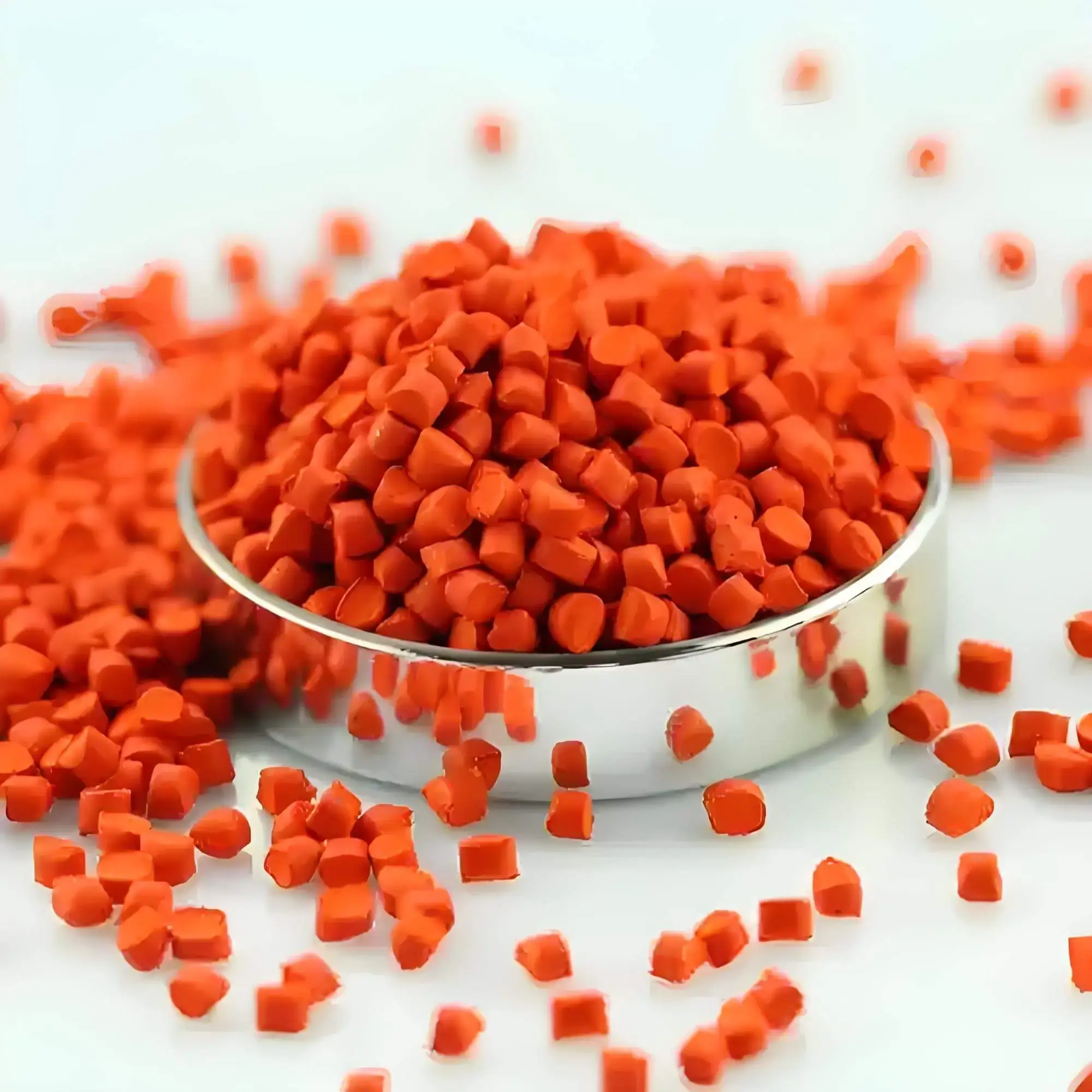
When a colored engineering plastic (such as ABS, PC, or Nylon) changes shade during injection molding, it is experiencing thermal degradation of the chromophore. Unlike standard polyolefins processed at 200°C, engineering plastics require melt temperatures ranging from 250°C to over 300°C. At these extreme thermal thresholds, standard organic pigments burn, leading to immediate color shifting, yellowing, or total loss of opacity. Successful high temperature color matching mandates the use of a highly engineered custom color masterbatch utilizing ultra-high-heat-resistant pigments combined with a carrier resin that is chemically identical to the base polymer, ensuring zero phase separation under high shear.
In the realm of engineering plastics, color matching is not an art; it is a rigid thermal and chemical equation. Injection molders producing high-value components—such as automotive interior trims, medical device housings, and power tool casings—frequently face a maddening issue: the color of the molded part shifts drastically from the beginning of the run to the end, or changes entirely when residence time in the barrel fluctuates.
Operators often blame the injection molding machine’s PID controllers. In reality, the failure is almost always embedded in the chemical formulation of the colorant. Using cheap, polyethylene-based “universal” masterbatches in high-heat engineering resins guarantees catastrophic cosmetic and mechanical failure. This technical diagnostic exposes the thermal dynamics of coloring engineering plastics and outlines the formulation protocols required to achieve zero lot-to-lot color variance in aggressive molding environments.
1. The Thermal Death Zone: Pigment Survival at 280°C
The most common cause of color shifting in Polycarbonate (PC) or Acrylonitrile Butadiene Styrene (ABS) is pigment incineration.
Standard commodity pigments (often found in generic colored masterbatches) are designed for PE or PP and begin to chemically break down at 220°C.
The Chromophore Collapse: When these organic pigments are subjected to the 260°C–300°C processing window of PC or Nylon, their molecular chromophores (the part of the molecule responsible for color) literally burn. Reds turn brown, bright yellows turn into a muddy amber, and whites lose their masking power.
The Engineering Solution: A true Custom Color Masterbatch Matching Service filters out all low-temperature organics. Formulators must utilize complex inorganic color pigments (CICP) or highly specialized, high-molecular-weight organic dyes that possess certified thermal stability exceeding 300°C. Just as outdoor applications require specific pigment selection detailed in our Lightfastness vs. Weatherability Guide, high-heat applications require uncompromising thermal screening.
2. The Myth of the "Universal Carrier"
Perhaps the most destructive practice in the industry is the use of “universal” masterbatches. These are typically heavily loaded pigments suspended in a high-melt-flow Polyethylene (PE) or Ethylene-vinyl acetate (EVA) carrier.
Phase Separation and Delamination: PE is completely incompatible with amorphous engineering resins like ABS or PC. When you inject a PE-based colorant into a PC matrix, the two polymers do not mix; they form distinct microscopic layers. Under high injection pressure, this causes “peeling” or delamination at the gate, destroying the part’s impact strength.
Polymer-Specific Matching: To color ABS correctly, the masterbatch carrier must be SAN (Styrene Acrylonitrile) or a highly compatible ABS grade. To color Polycarbonate, the carrier must be Polycarbonate. This ensures the masterbatch melts and integrates seamlessly into the polymer matrix without acting as a foreign contaminant. If you are browsing our Global Colored Masterbatch Selector, always specify your base engineering resin so our lab can match the exact carrier chemistry.
3. The Chemical Bite of Nylon (PA6 / PA66)
Nylon presents a unique set of nightmares for color matchers. It is not just about the high processing temperature (often up to 290°C for PA66); it is about the chemical nature of the polymer itself.
The Reducing Agent Effect: Molten Polyamide (Nylon) acts as a strong chemical reducing agent. If you use standard pigments, the Nylon melt will chemically attack and strip the oxygen from the pigment molecules during the residence time in the barrel. The color will literally fade away or shift to a completely different hue before it even hits the mold.
Moisture Amplification: Nylon and ABS are highly hygroscopic. If the base resin or the masterbatch is not dried to a moisture content below 0.02%, the trapped water turns into superheated steam. This not only causes silver streaks (similar to the defects analyzed in our Desiccant Masterbatch Guide for Recycled Plastics), but the steam rapidly accelerates the hydrolytic degradation of both the polymer and the pigment, compounding the color shift.
4. Shear Heating and Gate Geometries
In thin-wall engineering plastic components, the physical design of the mold can destroy the color. As highly viscous ABS or PC is forced through a microscopic pinpoint gate at high velocity, immense frictional shear heat is generated.
Even if the barrel temperature is set to a safe 240°C, the localized shear heating at the gate can spike the melt temperature to 280°C for a fraction of a second. If the colorant formulation lacks the thermal headroom to survive this sudden spike, you will observe dark “burn marks” or “halos” radiating outward directly from the injection gate.
Market Relevance: Securing High-Tolerance OEM Contracts
For injection molding factories competing for high-end consumer electronics, power tools, or automotive contracts, color consistency is a pass/fail metric. Brands like Dewalt, Dyson, or automotive Tier-1 suppliers utilize strict spectrophotometer readings. If a batch of PC/ABS alloy parts drifts by a Delta E ($\Delta E$) of more than 0.8 because the machine sat idle for 5 minutes and the pigment degraded in the barrel, the entire shipment is rejected.
Winning and keeping these lucrative contracts requires removing the variability of cheap colorants. By partnering with a masterbatch manufacturer that engineers polymer-specific, high-heat stable formulations, molders can drastically widen their processing window. You stop fighting the injection molding machine, eliminate scrap generated by color shifting, and guarantee perfect Pantone matching from the first shot to the millionth.
What do you think?
[…] and Rheological Consistency: As explored in our technical brief on Coloring Engineering Plastics and Thermal Degradation, if the masterbatch supplier alters the Melt Flow Index (MFI) of the carrier resin, it changes how […]
[…] chemical compatibility is as critical as the thermal stabilization protocols discussed in our Custom Color Matching for Engineering Plastics […]
[…] This thermal degradation is identical to the pigment-induced burnouts we solve in our Custom Color Matching for Engineering Plastics […]