
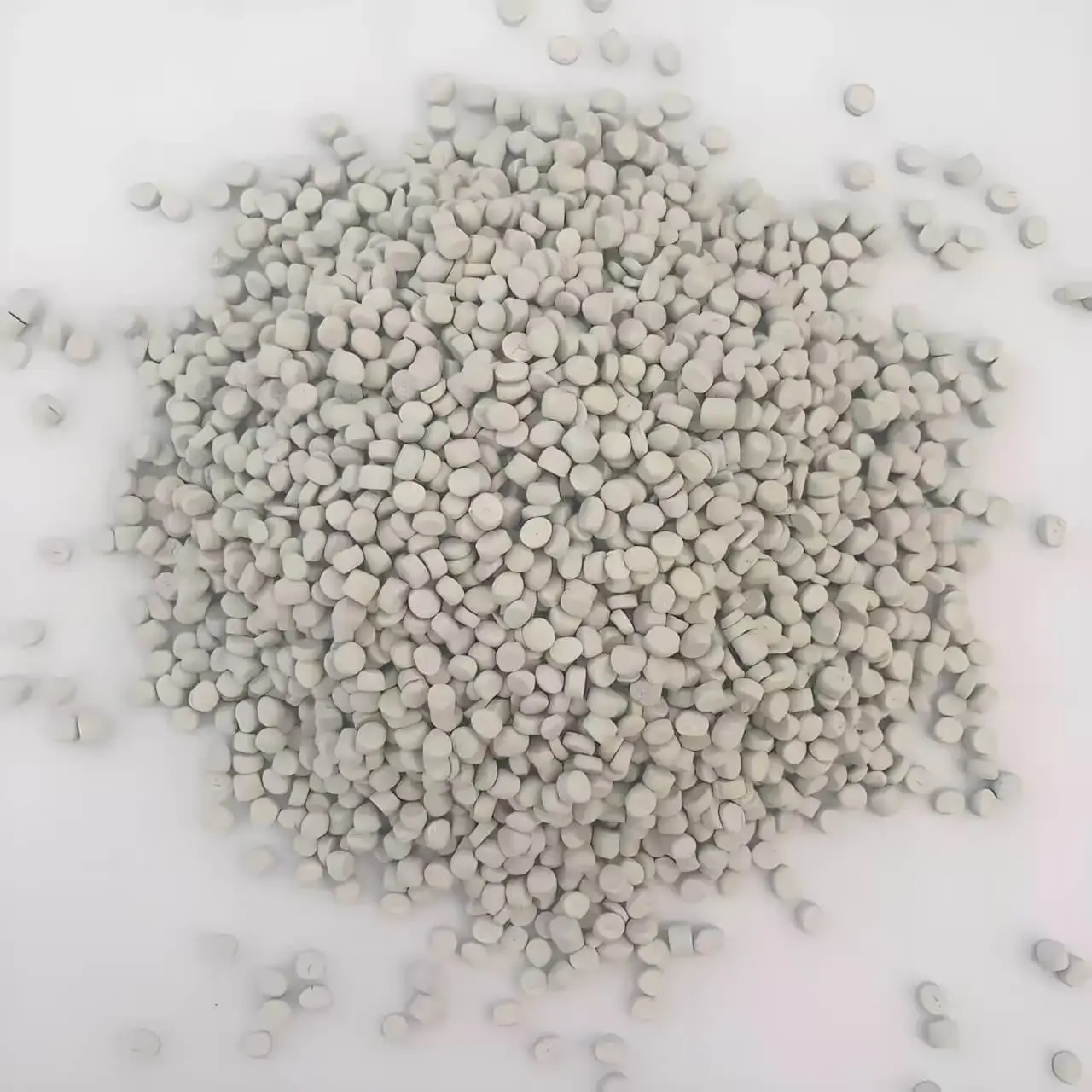
Every factory running recycled HDPE, LDPE, or PP flakes faces the same operational bottleneck: moisture. Post-consumer polymers are inherently hygroscopic, retaining water from washing lines, storage humidity, and residual paper labels. When this damp material hits the extruder, the water superheats into high-pressure steam. The macroscopic results are immediate: dense clusters of bubbles, surface pitting, or fragile “lacing” that collapses the blown film bubble or causes sheets to tear on the haul-off.
Relying solely on external desiccant drying silos is a massive energy drain that rarely strips deeply bound moisture from contaminated PCR. To maintain high output rates and structural integrity, extrusion plants must deploy chemical binding. This technical assessment details the exact chemical kinetics of active moisture scavenging, providing a practical framework to eliminate moisture in recycling without sacrificing mechanical performance.
1. The Chemistry of De-moisturization: CaO Kinetic Conversion
Physical drying methods work on the surface, but they fail when moisture is encapsulated inside a compressed plastic flake. When that flake enters the compression zone of the screw, the internal water flashes into steam, creating structural voids.
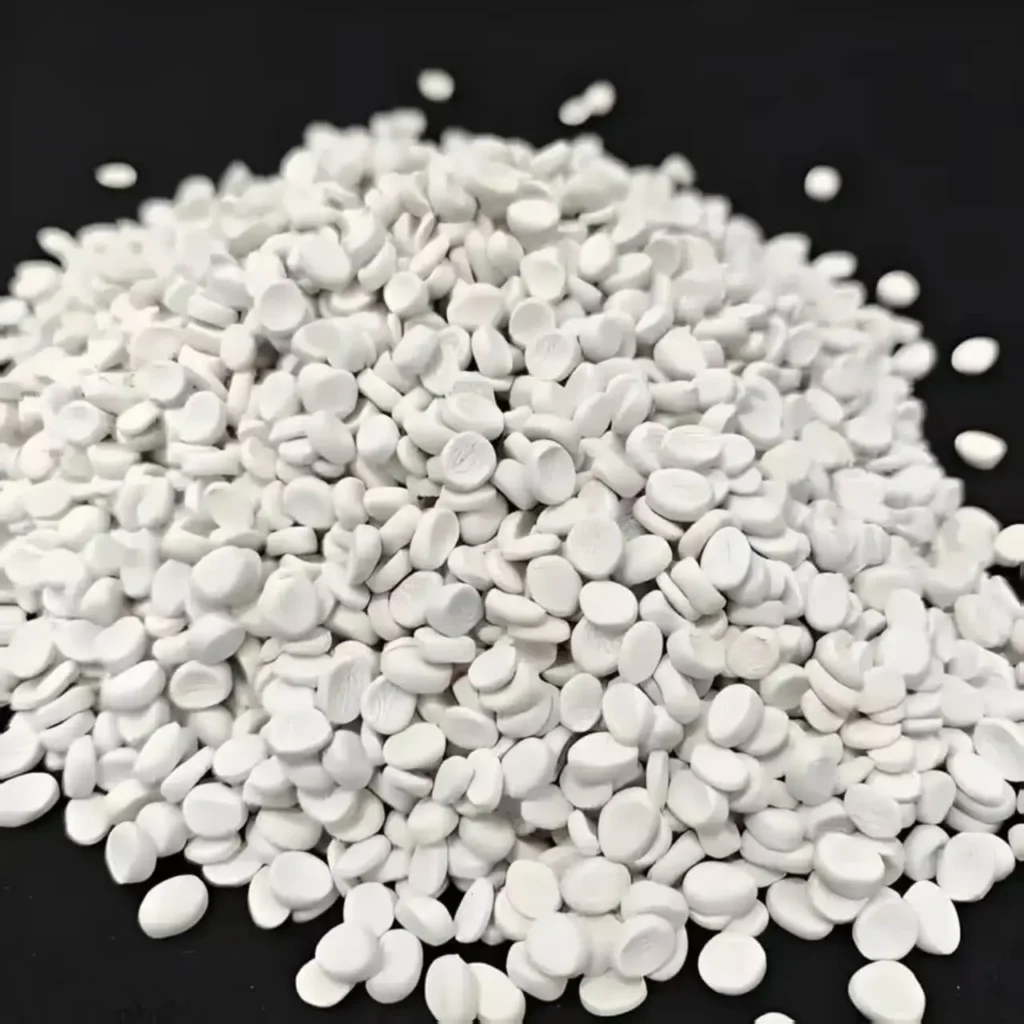
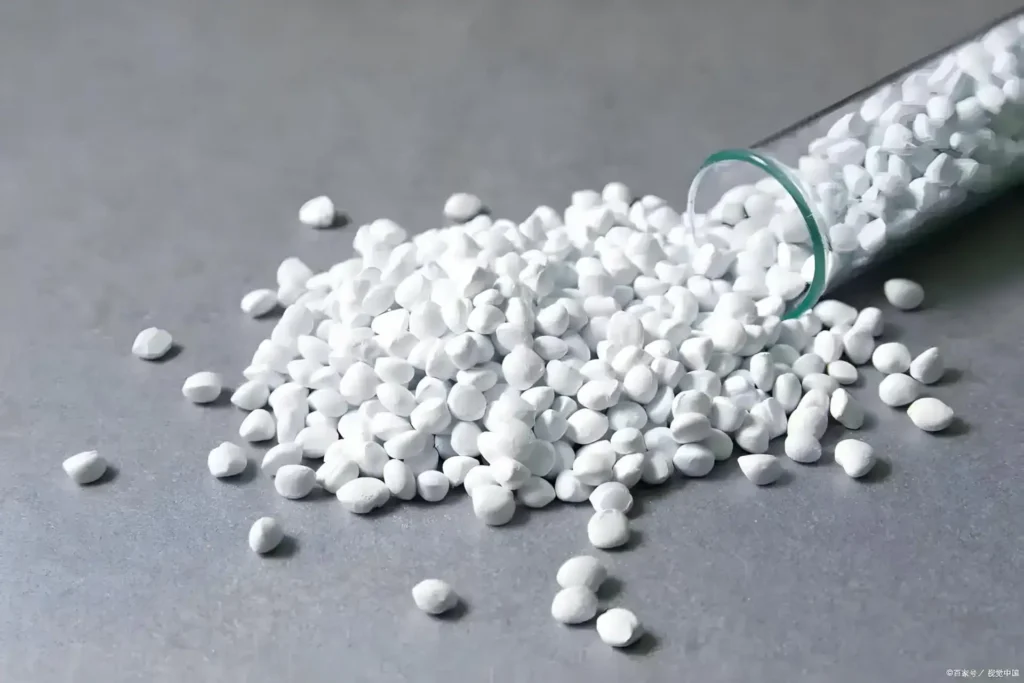
To stop this vaporization, we integrate a highly reactive chemical scavenger directly into the melt via a premium Defoaming Masterbatch. The core reaction follows a precise stoichiometric conversion:
During this exothermic chemical shift, active Calcium Oxide binds the water vapor into a stable mineral hydroxide.
Thermal Stability: The resulting Calcium Hydroxide ($Ca(OH)_2$) remains thermally stable up to approximately 350°C. This threshold is well above the typical processing window of polyolefins, guaranteeing that the trapped water cannot re-vaporize at the die lip.
Physical Properties: The byproduct manifests as an ultra-fine, microscopic mineral particle that distributes evenly throughout the polymer matrix. Instead of creating a defect, it acts as a mild, non-abrasive reinforcement filler.
2. Structural Defect Analysis: Bubbles, Silver Streaks, and Lacing
When moisture is left unchecked in the extruder, it ruins the mechanical properties of the final product. Here is how water vapor destroys different applications:
Blown Film Lacing and Windows: In thin-gauge recycling runs, steam pockets expand rapidly as the melt exits the die. This creates elongated, un-pigmented clear zones (“windows”) or open tears (“lacing”) that destroy film barrier properties. This failure is as catastrophic to a production run as the pigment agglomerates detailed in our Ultra-Thin Blown Film White Masterbatch Guide.
Injection Molding Silver Streaks (Splay Marks): In rigid components, the steam is dragged along the polished tool face during the injection stroke. This creates fan-shaped silver streaks that ruin the aesthetics of the part. This cosmetic destruction is highly problematic for premium parts, mimicking the surface haze issues analyzed in our technical guide on Carbon Black Particle Size and High-Gloss Formulations.
Sheet Extrusion Pitting: For thick geomembranes or construction sheets, trapped steam creates internal voids and surface pits that drastically lower the puncture resistance and long-term burst pressure of the sheet.
3. Formulating for Success: Particle Distribution and Screen Pack Management
Not all desiccant masterbatches are engineered equally. Cheap, low-tier anti-moisture additives use unrefined, coarse limestone with massive particle diameters.
Using an unrefined masterbatch introduces severe processing risks:
Agglomeration & Pressure Spikes: Coarse Calcium Oxide clusters fail to disperse cleanly. They behave like un-melted gels, leading to rapid screen pack clogging and sudden melt pressure spikes. This mirrors the compounding errors covered in our comprehensive Blown Film Troubleshooting Protocol for Gels and Black Spots.
The Premium Solution: High-grade desiccant formulations utilize surface-treated, ultra-fine CaO particles (typically under 5 microns) coated with specialized organosilanes. This hydrophobic coating prevents the masterbatch from absorbing atmospheric moisture during storage, ensuring it only triggers when subjected to the intense heat and shear inside the extruder barrel.
4. Dosing Matrix and Application Guidelines
The required addition rate of the desiccant masterbatch is entirely dependent on the moisture percentage of your recycled feed stock.
Standard Regrind/Flakes (Moisture $< 1\%$): A baseline dosage of 1.0% to 2.0% is sufficient to neutralize surface moisture and eliminate silver splay marks on injection-molded pallets or crates.
Highly Contaminated PCR / Agricultural Waste (Moisture $1\% – 3\%$): Requires an aggressive dosage of 3.0% to 5.0%. At these higher loadings, matching the carrier resin MFI is critical to prevent viscosity drop-off at the die.
Co-Extrusion Tip: In multi-layer sheet extrusion utilizing a core layer of 100% recycled regrind, blend the desiccant masterbatch exclusively into the recycled core feed stream, while protecting the outer virgin skins with tailored colorants from our Global Colored Masterbatch Selector.
Market Relevance: Unlocking the Value in the Regional Recycling Shift
The global drive toward a circular economy has transformed plastic recycling from a niche operational choice into a high-margin commercial imperative. Across Europe and the Middle East, large-scale municipal waste contracts and mandatory recycled-content quotas are forcing plastic processors to maximize their consumption of post-consumer regrind.
However, processing damp recycled flakes without chemical additives means running machines at a fraction of their rated capacity just to allow moisture to vent. In high-overhead manufacturing environments, this loss of throughput destroys profitability. By deploying highly active anti-moisture additives, plastic re-processors can bypass expensive, energy-intensive pre-drying cycles and run 100% recycled scrap at maximum line speeds. This operational efficiency allows local manufacturers to deliver competitive, sustainable components that meet strict corporate environmental mandates.
In post-consumer recycling (PCR) and polymer reprocessing, an anti-moisture additive functions by executing an in-situ chemical reaction with entrapped water molecules during the high-temperature extrusion phase. Unlike physical desiccant surface adsorption, a premium desiccant masterbatch for plastics relies on active, micro-particle Calcium Oxide (CaO). Upon contact with moisture inside the heated barrel, CaO chemically converts into Calcium Hydroxide ($Ca(OH)_2$). This irreversible reaction traps water vapor at temperatures up to 300°C, effectively preventing steam vaporization, suppressing bubble formation, and eliminating silver splay defects on the extruded profiles.
What do you think?
[…] into superheated steam. This not only causes silver streaks (similar to the defects analyzed in our Desiccant Masterbatch Guide for Recycled Plastics), but the steam rapidly accelerates the hydrolytic degradation of both the polymer and the pigment, […]